How Does a Tricone Drill Bit Work?
A tricone drill bit works by combining rotation, weight on bit, and the rolling action of three independently rotating cones to break rock at the bottom of a borehole. As the drill string rotates, the three cones roll against the formation while their teeth or tungsten carbide inserts crush, chip, gouge, and scrape the rock. Drilling fluid or compressed air then removes the broken cuttings from the bottom of the hole.
The key to a tricone bit is the interaction between its three cones, cutting structure, bearing system, and bit geometry. Choosing the right combination for the formation can improve penetration performance, control wear, and extend bit life.
What is a Tricone Drill Bit?
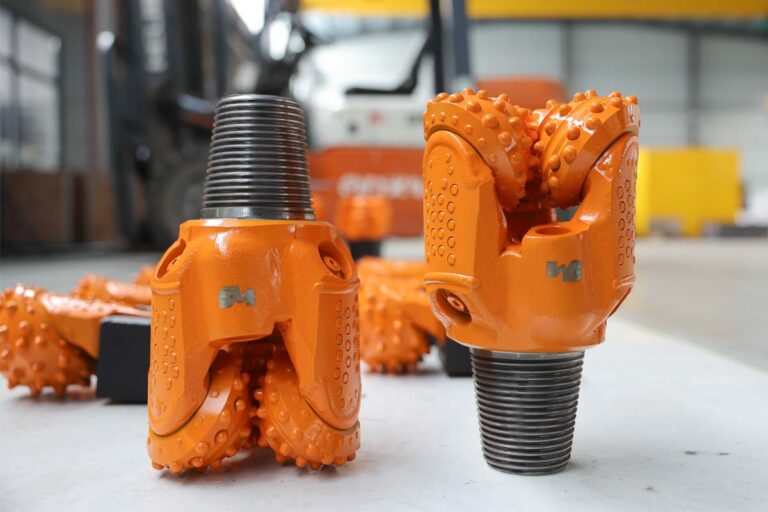
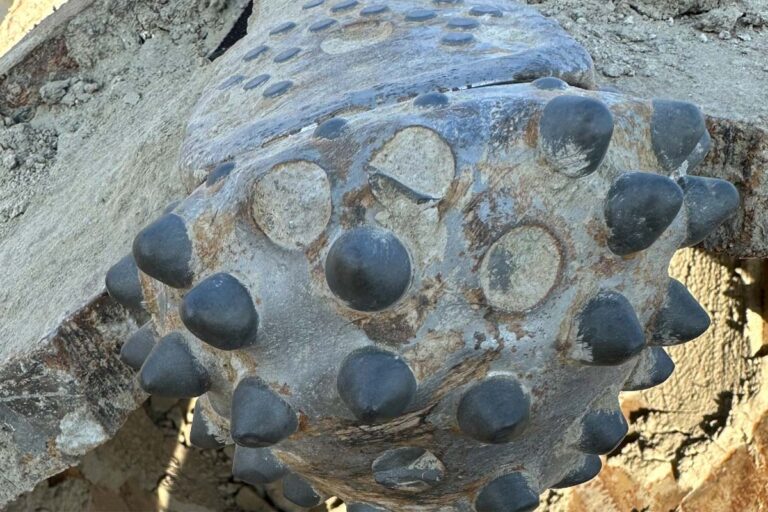
A tricone drill bit, also called a roller cone bit, is a rotary drilling tool with three cone-shaped cutters mounted on the bit body. Each cone contains a cutting structure designed to interact with the formation as the bit rotates.
The three cones rotate independently around their bearing systems. Depending on the drilling formation, the cones may use milled steel teeth or tungsten carbide inserts (TCI).
A typical tricone bit includes:
- Three rotating cones
- Steel teeth or TCI inserts
- Bearings
- Seals
- Bit legs and body
- Nozzles
- Gauge protection
These components work together to transfer drilling energy into the formation and remove the resulting rock cuttings.
How Does a Tricone Drill Bit Work?

1. The Drill String Transfers Rotation and Weight
The drilling system rotates the drill string, which transfers torque to the tricone bit. At the same time, weight on bit (WOB) pushes the cutting structures against the rock formation.
WOB is essential because the teeth need sufficient force to penetrate and break the formation. However, excessive WOB can increase tooth loading, vibration, bearing stress, and premature wear.
2. The Three Cones Roll and Rotate
As the bit body rotates, the three cones roll along the bottom of the borehole. Each cone rotates around its own journal or bearing system.
This creates a combined rotary and rolling motion. The cone geometry allows the cutting structures to contact different areas of the hole bottom instead of repeatedly following exactly the same path.
This is one of the main reasons tricone bits can efficiently cover the bottom of a borehole.
How Do the Three Cones Work Together?
The three cones are positioned to distribute the cutting action across the bottom of the hole. Their geometry, cone angle, journal angle, offset, tooth arrangement, and intermesh all influence how the bit interacts with the formation.
Cone Geometry: The shape and angle of each cone determine how the teeth contact the formation and how much rolling, crushing, gouging, or scraping occurs during drilling.
Cone Offset: Cone offset changes the relative movement between the cone teeth and the formation. A properly designed offset can increase the scraping or gouging action, which is particularly useful in softer formations.
Tooth Intermesh: The arrangement of the cutting rows helps distribute the rock-breaking load and reduce the risk of inefficient tracking or formation buildup around the cutting structure.
How Does a Tricone Bit Break Rock?
Tricone bits do not rely on a single cutting action. Depending on the formation and bit design, rock can be broken through a combination of crushing, chipping, gouging, scraping, and shearing.
Crushing: As WOB pushes the teeth into the formation, concentrated contact forces exceed the strength of the rock and create fractures.
Crushing is especially important when drilling harder formations.
Chipping: The repeated contact between the cutting structure and the formation creates localized fractures and chips away pieces of rock.
Gouging: In softer formations, the teeth can penetrate deeper and remove larger pieces of material through a gouging action.
Scraping: As the cones roll and slide slightly across the bottom of the hole, the teeth scrape and remove formation material.
Shearing: Depending on the tooth geometry and formation, part of the rock can also be removed through shearing forces.
How Does Drilling Fluid Help a Tricone Bit Work?
Breaking rock is only part of the drilling process. The broken cuttings also need to be removed from the bottom of the hole.
Drilling fluid or compressed air is directed through nozzles near the cones. The fluid helps:
- Remove rock cuttings
- Cool the cutting structure
- Clean the bottom of the hole
- Reduce bit balling
- Help maintain drilling efficiency
Effective cuttings removal is especially important in formations where the bit is prone to balling or where large amounts of cuttings are generated.
How Do WOB and RPM Affect Tricone Bit Performance?
Two important drilling parameters are weight on bit (WOB) and rotary speed (RPM).
Weight on Bit (WOB): WOB determines how strongly the cutting structure engages with the formation.
Too little WOB may cause the teeth to slide rather than efficiently penetrate the formation. Excessive WOB can increase tooth wear, bearing loads, vibration, and the risk of premature failure.
Rotary Speed (RPM): RPM controls how quickly the cones and cutting structures interact with the formation.
Higher RPM can increase drilling speed in suitable formations, but excessive RPM may increase heat, vibration, tooth wear, and bearing stress.
The ideal WOB and RPM depend on the bit design, formation strength, abrasiveness, drilling method, and hole conditions. Manufacturer recommendations should be used as a starting point and adjusted according to actual drilling performance.
What Role Do Bearings Play in a Tricone Drill Bit?
Each cone must rotate reliably under significant load. The bearing system supports the cone and controls its rotation while protecting the internal components from drilling conditions.
Common bearing arrangements include: Open roller bearings / Sealed roller bearings / ealed journal bearings.
Bearing design can influence: Load capacity / Cone rotation / Seal reliability / Bit life / Performance under demanding conditions.
A bearing problem can quickly lead to cone instability, abnormal vibration, cutting-structure damage, or complete bit failure.
How to Choose the Right Tricone Drill Bit
The right tricone bit should be selected based on the formation and drilling conditions rather than bit size alone.
1. Formation Hardness
Soft, medium, hard, and very hard formations require different cutting structures.
2. Formation Abrasiveness
Highly abrasive formations generally require stronger wear-resistant cutting structures.
3. Steel Tooth or TCI
Choose the cutting structure according to formation characteristics and required drilling performance.
4. Bearing System
The bearing design should match the expected load, drilling environment, and operating conditions.
5. IADC Classification
The IADC code provides a standardized way to identify roller-cone bit characteristics and formation suitability.
6. WOB and RPM
Operating parameters should be matched to the selected bit and formation.
Conclusion
A tricone drill bit works through the coordinated action of three rotating cones, cutting structures, bearings, drilling parameters, and fluid or air circulation. The cones roll across the formation while their teeth or inserts break the rock through crushing, chipping, gouging, scraping, and shearing.
The right tricone bit is not simply the strongest or most durable option. It is the bit whose cutting structure, bearing system, geometry, and operating parameters are properly matched to the formation.
For drilling contractors and equipment buyers, understanding how a tricone bit works is the first step toward choosing the right bit, improving drilling performance, and controlling total drilling costs.
Need help selecting the right HDD bit for your project? Send us your formation details, pilot hole size, target diameter, and rig model for a technical recommendation.
[ How to Choose the Right Water Well Drill Bits for Every Ground Condition ]