
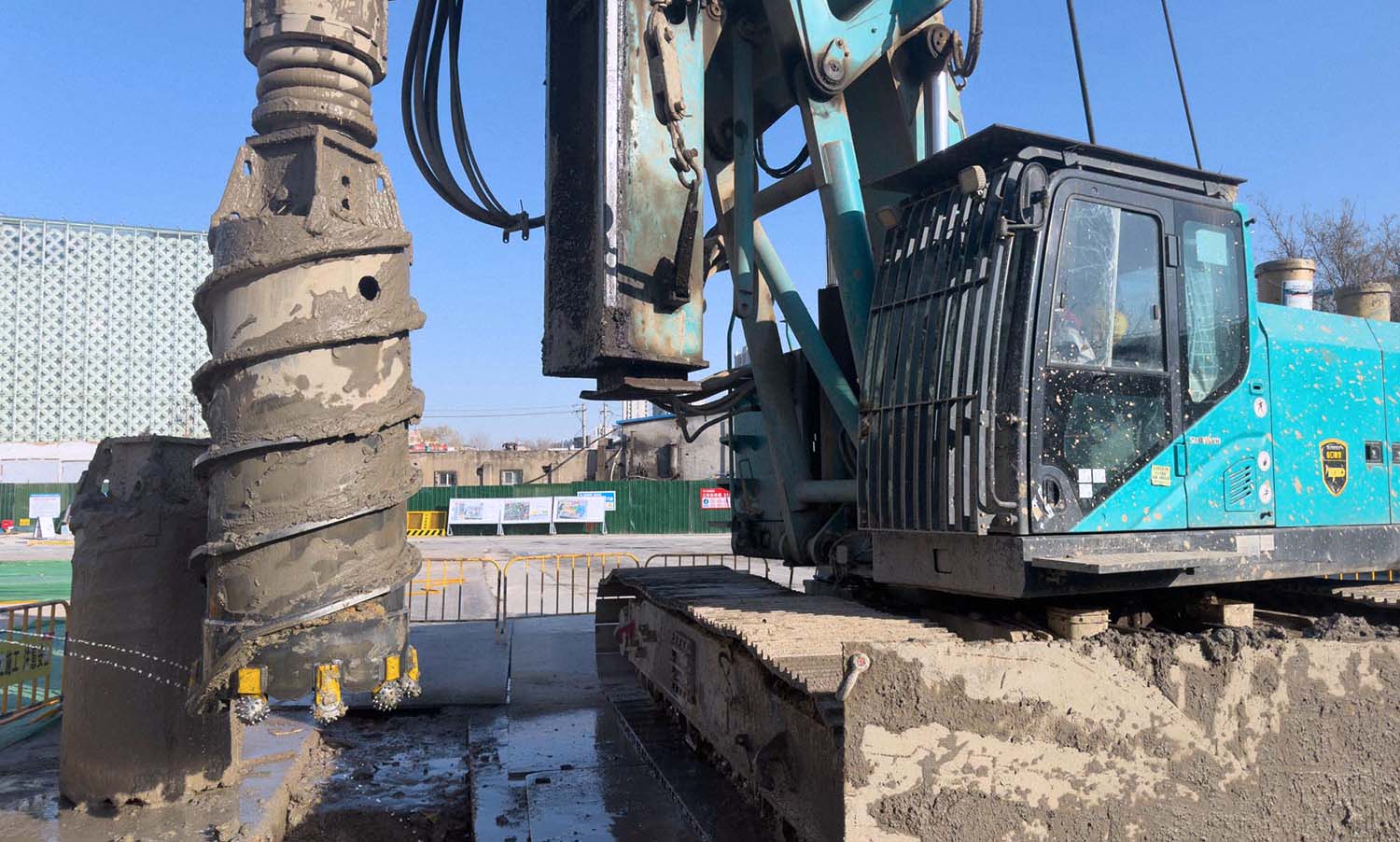
In bore pile construction, choosing the wrong drilling tool can result in:
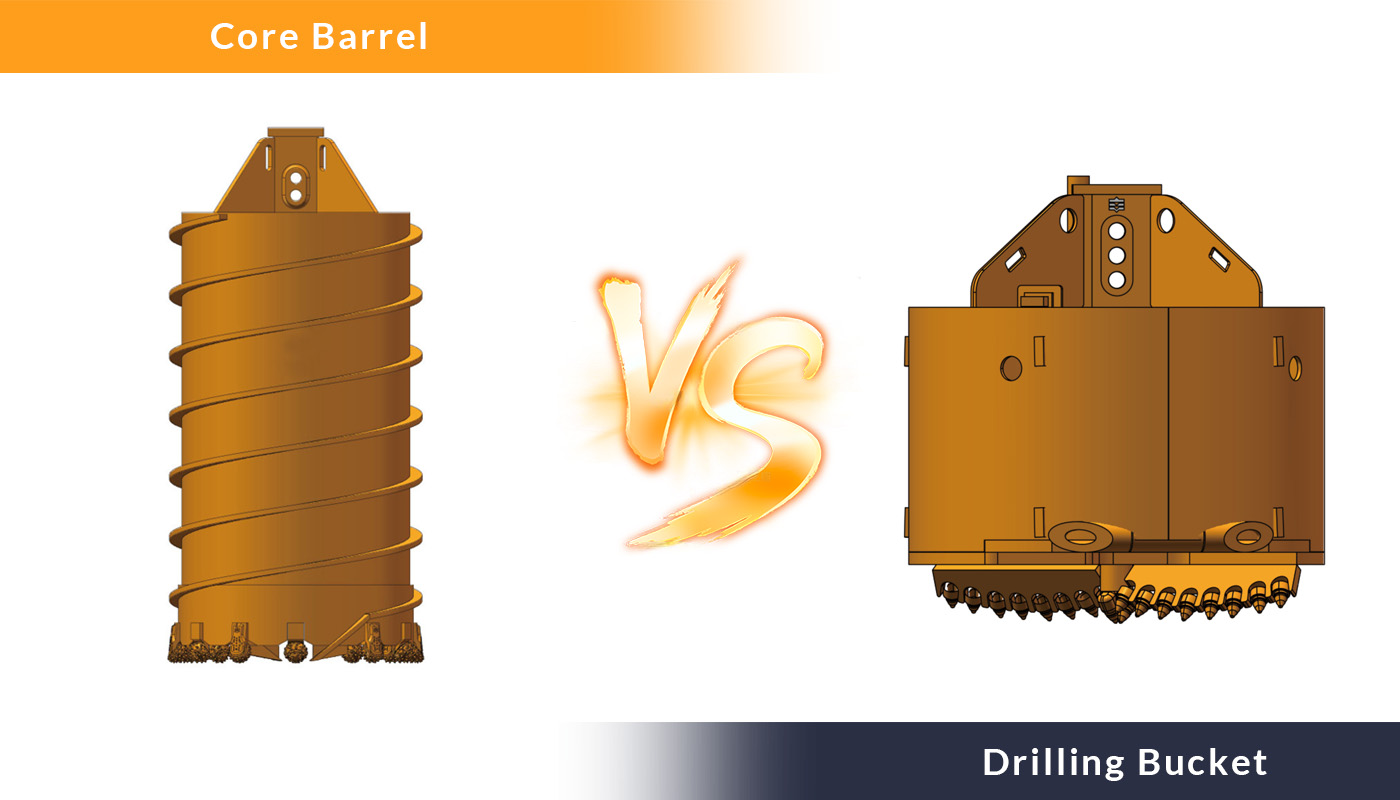
A core barrel auger (also known as coring barrels or a drilling core barrel) is a heavy-duty drilling tool designed for hard rock and fractured formations. It uses roller bits to crush, cut, and core rock efficiently.
Unlike a drilling bucket, which is used for removing loose soil, a core barrel auger is specifically engineered for rock penetration and breaking, making it essential in hard rock bore pile operations.
To better understand how core barrel augers work in hard rock, read:
[ How to Choose the Right Core Barrel for Different Rock Conditions ]
Best Applications:
Key Advantages:
A drilling bucket is a rotary drilling tool mainly designed for soil, clay, and loose formations. It works by cutting and collecting material inside the bucket
Unlike a core barrel auger (also known as coring barrels or a drilling core barrel), which is built for crushing and penetrating hard rock, a drilling bucket has limited capability in high-strength formations. This makes it unsuitable for hard rock bore pile applications without pre-drilling.
To better understand how drilling bucket work in rock, read:
[ What Is a Drilling Bucket? ]
Best Applications:
Key Advantages:
| Factor | Core Barrel Auger | Drilling Bucket |
|---|---|---|
| Rock Strength | Suitable for medium to very hard rock (>70 MPa up to 280 MPa) | Suitable for soil to weak rock (<70 MPa), especially weathered layers |
| Function | Rock breaking & coring | Rock excavation & material removal |
| Operational Stability | Stable in deep rock drilling | Stable in soil and mixed rock |
| Best Ground Conditions | Hard rock, fractured rock, karst formations | Soil, clay, sand, weathered rock, mixed ground |
1.Rock Compressive Strength
If the rock strength exceeds 70 MPa, a Drilling Bucket will likely struggle, leading to excessive tooth wear and potential equipment damage. In this scenario, the Core Barrel is the clear winner as it reduces the contact area, allowing for deeper penetration.
2.Formation Integrity
3.Torque and Crowd Pressure
Core barrels require high downward pressure to "bite" into the rock. Ensure your rotary drilling rig has the necessary specifications to match the tool.
In many professional piling projects, the best strategy is a Hybrid Approach. Contractors often use a Core Barrel to cut the rock ring and a Rock Auger or Bucket to break and clean out the core.
Final Verdict: For "Hard Rock" (solid and high MPa), the Core Barrel is indispensable. For "Medium-Hard or Fractured Rock," the Drilling Bucket will save you time and money.
Still facing drilling problems in hard ground?
Send us your soil condition — we'll recommend the exact bucket solution.
[ How to Choose the Right Core Barrel for Different Rock Conditions ]
We provide high-efficiency, precision drilling equipment and technical support to ensure the success of mineral, geological, and engineering projects under complex global conditions.
A core barrel auger is the most effective tool for hard rock drilling in bore pile construction. It is designed to break and core high-strength rock formations (up to 280 MPa), while a drilling bucket is mainly used for soil and soft formations and performs poorly in hard rock conditions.
Core barrel drilling fails in hard rock mainly due to incorrect tool selection, mismatched cutting teeth, insufficient torque, and poor drilling parameters. To improve performance, contractors must optimize the core barrel design, select the right teeth, and match machine power with rock strength.
Choosing the right rock core barrel is critical for achieving high efficiency, low wear, and stable performance in hard rock drilling projects. Many contractors struggle with slow penetration, excessive tool wear, or even tool failure—often due to incorrect tool selection.
As one of the most essential Rotary Drilling Tools, the core barrel plays a key role in bored pile construction, especially in challenging ground conditions.
Not sure which drilling bucket fits your project? Start with our expert guides: [ What is a Drilling Bucket ? How to Choose the Right
When drilling in silt, clay, gravel , or fracturate rock , many contractors encounter the same costly problems: slow drilling speed, rapid tooth wear, and frequent bucket blockage.
These are not random issues — they are clear signs that your bucket drill is not matched to the ground conditions.
What is a heavy duty drilling bucket used for?
A heavy duty drilling bucket is designed for fracturate rock, clay, and mixed ground conditions. It features reinforced structure and wear-resistant teeth to improve penetration, reduce wear, and enhance the performance of a bucket drill rig.
PDC bits and tricone bits differ in cutting method and adaptability. PDC bits offer higher speed and lower failure risk due to no moving parts, while tricone bits perform better in hard rock and variable formations. The best choice depends on matching the bit to your geology.
Temporary casing is removable and reusable, making it the most cost-effective solution for most piling projects.
Permanent casing is only used when structural or geological conditions require it.
A PDC reamer is a drilling tool used in horizontal directional drilling (HDD) to enlarge pilot holes. Equipped with polycrystalline diamond compact cutters, PDC reamers provide high cutting efficiency, excellent wear resistance, and stable drilling performance in rock and hard ground formations.
What Is a Drill Bit Cone? A drill bit cone is a conical rock-cutting tool widely used in rotary drilling and foundation construction. It features
Want more product details? Send us an inquiry
Copyright by Meclead.com.